
As dvLED continues to accelerate as the dominant force in visual technology, 2025 has marked a year of rapid innovation, new possibilities and transformative thinking. From ultra-fine pixel pitches and MicroLED breakthroughs to dvLED becoming a true architectural material, the industry has shifted at remarkable speed. To explore these developments and what they mean for integrators, designers, specifiers and end users, we sat down with Rob Bint, CEO of The LED Studio, for an in-depth conversation. In this candid Q&A, Rob shares his perspective on the trends shaping dvLED today, the opportunities ahead, and why education, sustainability and thoughtful specification are more important than ever.
Q1: What significant new developments and innovations in dvLED technology have taken place in the last 12 months?
Over the last 12 months, we’ve seen some pivotal shifts in dvLED technology that are really redefining its potential. First, there’s been a notable evolution in pixel technologies, particularly with the adoption of MicroLED in package, which enables even higher brightness and energy efficiency. We’ve also seen fine-pitch LED displays now hitting 240Hz, which opens up serious possibilities for simulation and multi-perspective environments that used to be projection-led.
Sustainability is also playing a much more critical role. We’re seeing less heat waste and more efficient power usage, leading to more reliable, high-performance displays that are better for the planet. Finally, all-in-one solutions have taken off, both in large-format displays for corporate spaces and more agile options for digital messaging in flexible environments.
Q2: Where are we at with dvLED technology today? What's available in terms of display sizes, resolution, pixel pitches, refresh rates, built-in functions, technology types, etc?
We’re in an exciting place. Pixel pitches have dropped below 0.7mm, which means true ultra-HD is now viable at closer distances than ever before. We’re seeing refresh rates of up to 240Hz, which is particularly valuable for broadcast, simulation and immersive environments. What’s really compelling is the convergence of fine pitch and high brightness, especially for outdoor displays, where dvLED now offers both close-proximity viewing and durability in high ambient light.
What’s exciting is how much more accessible fine-pitch displays have become. With falling production costs for COB and MicroLED, these ultra-fine resolutions are now within reach for sectors that were previously priced out, such as education, smaller corporate spaces and even high-end residential.
Functionally, we’re also packing more into each display, with built-in media players, simplified connectivity and even embedded audio in some all-in-one systems. dvLED is no longer just a display surface; it’s becoming a fully integrated media solution.
Q3: Where does microLED fit in?
MicroLED is undoubtedly the future for premium applications. Thanks to advances in manufacturing, we’re able to surface-mount MicroLEDs directly, making them easier to repair, more scalable and up to 40% more energy efficient than traditional SMD. With modern MicroLED, we’re now achieving uniform calibration across batches, meaning better colour consistency, fewer rejected panels and easier serviceability. You also get superior brightness and contrast, which makes it ideal for high-end installations, whether that’s luxury retail, control rooms or immersive environments. MicroLED brings performance, longevity and sustainability together in one platform.
Q4: And what about OLED and transparent OLED? How do they compare with conventional dvLED, and what applications are they most (or least) suitable for?
OLED and transparent OLED definitely have their place, particularly in low-light environments or boutique retail where design is as important as performance. But OLED comes with limitations in brightness, durability and lifespan. dvLED still leads in brightness, scalability and ruggedness, making it a better choice for most public, commercial and outdoor applications.
Transparent dvLED is also evolving and has exciting potential for retail shopfronts and architectural applications, essentially where form and function both matter. That said, the customisability and brightness of dvLED still give it the edge in most scenarios.
Q5: What other built-in features and criteria do buyers need to consider? (e.g., touch, sound, connectivity, PC/media player, security, ruggedisation, energy consumption, weight, etc.)
One of the biggest trends right now is the shift towards All-In-One solutions that reduce the need for multiple components. It’s about making dvLED simpler and more accessible.
We’re also seeing demand for displays that integrate with CMS platforms, allow for multi-window presentations and support advanced PiP. Especially in control rooms and corporate settings, these features turn a screen into a full-fledged collaboration platform.
Energy consumption is increasingly top of mind, especially with corporate ESGs. We’re also seeing more demand for ruggedisation, particularly in high-traffic or transport environments, as well as lightweight cabinets for easier installation. It’s no longer just about the screen; it’s about the total ecosystem around it.
Q6: What kind of locations and applications is dvLED most appropriate for? And what applications is it not so suitable for? What alternative(s) would you recommend for these?
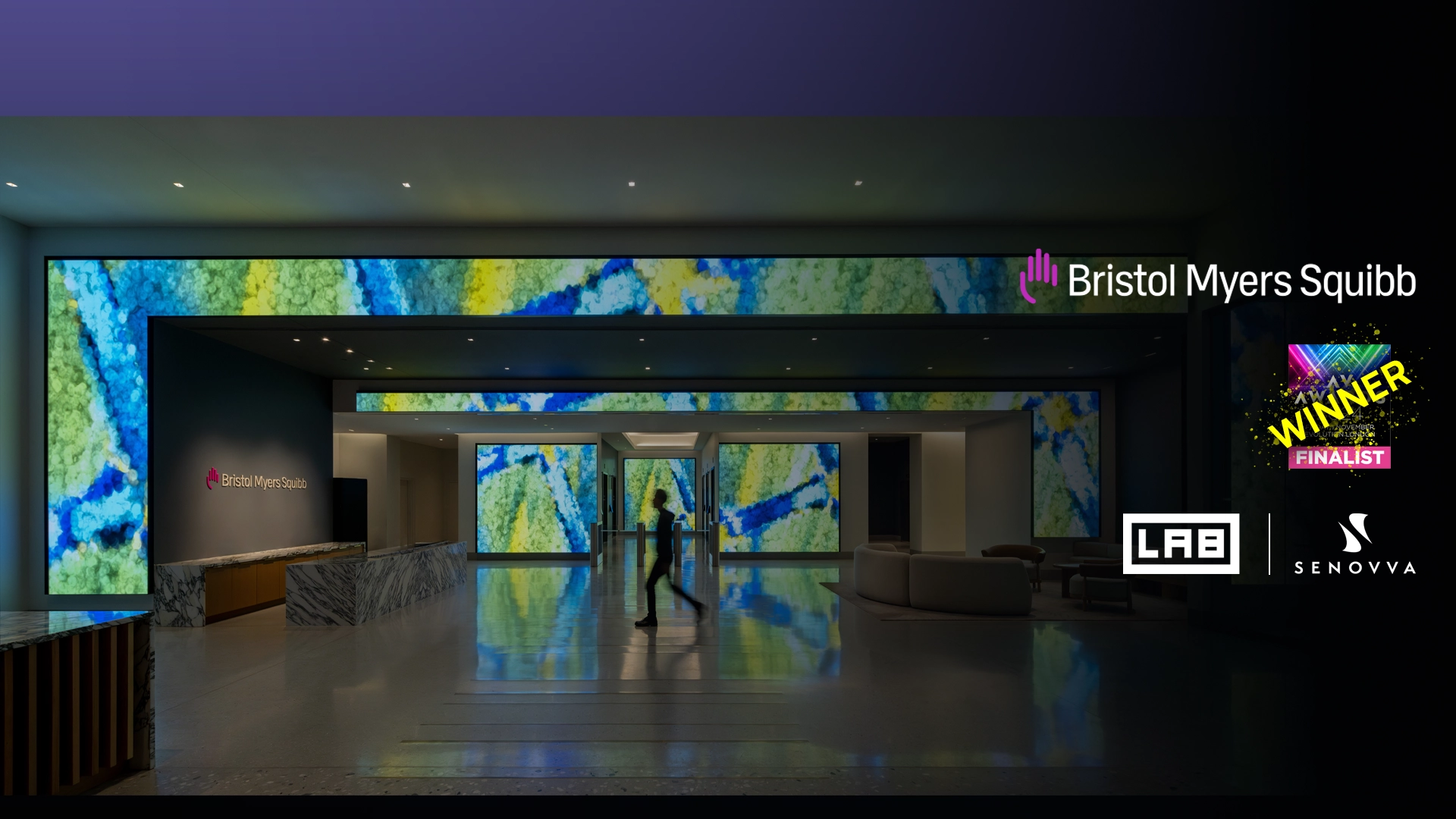
More and more, LED is being specified not just as a display but as an architectural element. Whether that’s LED mesh wrapping a façade or fine-pitch panels acting as living walls in lobbies, the conversation is starting much earlier in the design process, which is exactly where it should be. dvLED is now being used as digital drywall; it’s becoming part of the architecture. From corporate spaces and retail to visitor attractions and control rooms, the flexibility and modularity of dvLED make it a great fit.
Where it’s less ideal is in very small spaces or low-usage environments where a high investment isn’t justifiable. In those cases, LCD or OLED might make more sense. But even that line is blurring with the advent of smaller, more cost-effective dvLED solutions.
 Q7: How should buyers choose the right specification for their needs?
There are too many scenarios where buyers end up overspecifying or underspecifying because no one walked them through the variables. Our role as a manufacturer isn’t just to sell; it’s to educate. We want clients to know when a 1.2mm pitch is critical and when a 2.5mm will deliver the same impact at half the cost. There’s a phrase we use at LED Studio: don’t pay for pixels you don’t need.
Too often, buyers fixate on tight pixel pitches when they’re not necessary for the intended viewing distance. A good rule of thumb is: minimum viewing distance in metres roughly equals pixel pitch in millimetres. For example, meeting rooms or classrooms might require a 1.2 to 1.5mm pixel pitch, with moderate brightness and integrated media control, whereas corporate receptions or public areas could go up to 2.5mm, as content is more ambient and pixel density matters less. The key thing is to understand your environment and audience first, then build your specification around that.
Q8: What challenges do organisations face when buying and installing dvLED, and how can these be tackled?
The complexity starts before the screen is even ordered. Pixel pitch, size, brightness, connectivity – buyers are often overwhelmed. Our goal has been to simplify that journey. A great place to start when comparing displays is to ask: is it common cathode? If it’s not, it should be. You’ll see major differences in energy usage, heat output and long-term operating costs.
During implementation, one of the biggest risks is poor cabinet alignment, which affects image quality. That’s why we’ve focused on modular systems that are easier to fit, reducing install time and improving reliability.
Post-installation, the challenge is serviceability. When a client needs to adjust brightness or change resolution, the ideal solution is a modular architecture where only a small portion of the screen needs replacing.
Q9: Do you have any examples you could share with us?
One of the most compelling examples we’ve seen this year is at the Kennedy Space Center Visitor Complex, where the LC-39 area was transformed into a fully immersive visitor experience. The challenge was to design and deliver a digital environment that could withstand extreme environmental pressures, including hurricane winds, salt air and constant launch vibrations, while also engaging thousands of visitors daily with rich, dynamic storytelling.
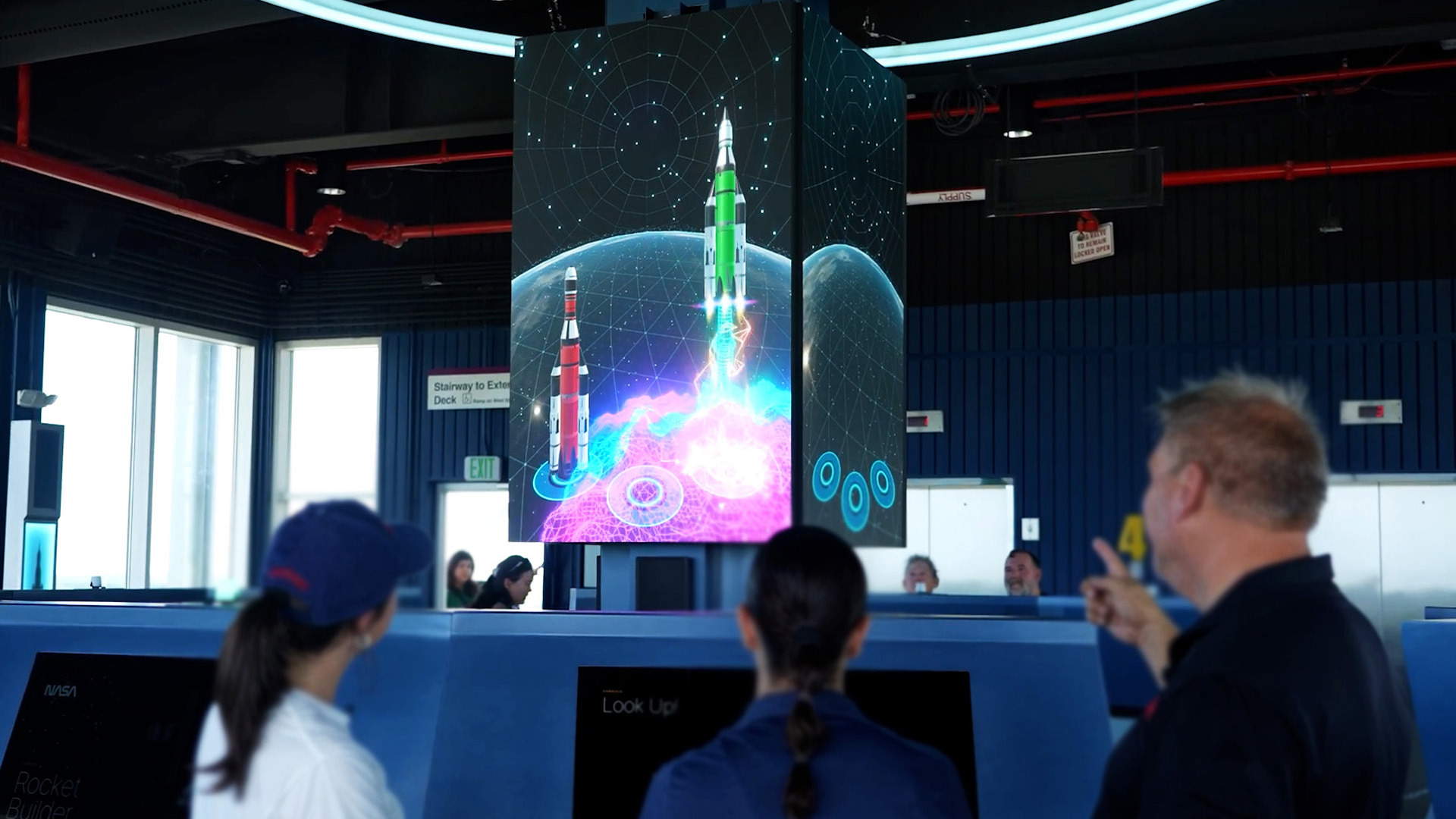 What made the project so interesting from a dvLED perspective was the integration of the displays into both the architectural fabric and the narrative flow of the space. The result wasn’t just screens bolted to walls; it was a cohesive, multi-zone experience where LED technology became the backbone of the story. From live-streaming launch feeds and real-time environmental data to interactive educational tools and immersive simulations, every element had to be thoughtfully designed around content, audience, and resilience.
Read the full Kennedy Space Center Visitor Complex case study here.